
Best Training Tools For Dogs

There are many different types of training tools available for dogs, so what are the best training tools for dogs? Leashes, clickers, and treat pouches are just a few of them.
There are a variety of training tools for dogs that can be helpful in teaching them new commands or behaviors.
Some of the most common tools are treats, clickers, and obedience collars.
Treats are a great way to motivate dogs to learn new things, and many trainers recommend using them frequently during training sessions.
Clickers are a noise-making device that is used to mark behaviors that the dog has done correctly; this helps the dog understand what it is being asked to do.
But what are the best training tools for dogs? What works for you? And what does your dog need the most?
Let’s find out! Getting started with training your dog is not as difficult as you may think.
Here are some of the best training tools for dogs to help you get started with dog training.
Clicker training – Best Training Tools For Dogs
 The basic concept of clicker training is the same as that of the classical clicker game, and that is to deliver a stimulus using a clicker after a response has been achieved.
The clicker is a bridging stimulus in operant conditioning. This allows for more rapid and precise delivery of a conditioned reinforcer.
Your dog will soon learn that the click sounds like a treat, and the game will be on!
To begin clicker training, practice first without the dog.
Toys are great for practice, so throw a ball up in the air and click when the ball reaches the highest point.
This training technique is highly effective for teaching your dog the most basic commands, such as sit.
Make sure you click immediately after your dog’s behavior. To get your dog used to the sound of the click, you can also take advantage of your own high-quality clicker by playing with it in a quiet environment.
Another benefit of the clicker is that it allows you to mark a specific behavior by clicking. This training tool will help you build a relationship with your dog and teach it to perform the behavior.
If your dog’s food or reward drive is low, clicker training will prove ineffective.
Using a high-value treat as a reward will only lead to weight gain in your dog, so it is best to use treats for rewards that are small in size and not worth too much.
Once you have successfully trained your dog to obey a command, use the clicker to test its response. The dog should immediately go to the treats when the clicker sounds.
Once he responds, you can move onto teaching him new commands. Alternatively, you can continue to click for a few seconds after the behavior and reward your dog with a treat.
If your dog doesn’t respond, it’s time to move on to other techniques.
In addition to the rewards associated with a positive response, the clicker is highly rewarding. The rewards provided can encourage your pet to try new things and try new ones.
While there are some risks associated with training your dog with a clicker, it is a valuable skill for all dog owners.
In addition to boosting your pet’s self-esteem, clicker training is an excellent way to make your home more peaceful.
You’ll find yourself with a dog that listens to you and tries new things.
Double-handle leash – Best Training Tools For Dogs
 If you’re looking for the best training tools for your dog, a double-handle leash is a great choice.
Not only does it have a longer, thicker handle, but it also comes with a second, ergonomically designed handle.
It’s ideal for medium to large-sized dogs and comes with a heavy-duty clasp. Leashes with this feature can be connected to a dog’s collar or chest straps.
This type of leash can also made with leather, but it may not be reflective and is not recommended for use in low-light situations.
This type of leash also comes with two clip attachment points. The clips on a standard six-foot leash can be used to attach a harness or a collar, and you can also use it to clip it to your own body.
The leash features an accessory loop that holds training treats. This feature makes it a good choice for walking dogs on busy streets or at night.
The two-handle leash works great for navigating high-traffic areas. It can easily guide your dog through a busy urban park or a pet store.
It is an excellent choice for a dog with a strong prey drive. The dual leash allows you to gently remind your dog to walk next to you when you notice a critter.
The leash is designed to be comfortable for both the owner and the dog.
A double-handle leash is one of the most important dog training tools for small to large breeds. Its extra-long handle is the perfect solution for small dogs who pull.
A double-handle leash is available in two sizes: small, and medium. The medium version has an inch-wide handle.
The Thunderleash is also an excellent choice for people who struggle to grip a traditional dog leash.
A double-handle leash is one of the most versatile training tools for dogs. The extra handles can be used to hang gadgets, such as cell phones or tablets.
Another advantage of a double-handle leash is that it is easier to control your pet. In addition, a double-handle leash is more comfortable to hold.
Treat pouches – Best Training Tools For Dogs
 A dog training pouch is a handy and convenient way to reward your dog with treats while training him.
These pouches come in various sizes, so you can select one that fits your dog’s size and training needs.
However, make sure you choose a pouch that is easy to open with just one hand.
Some dog training pouches even come with a magnetic closure, which makes a clicking sound when closed. This helps your dog learn to anticipate a treat.
Dogs usually have a huge appetite, so you may want to get a larger pouch if you’re training a large dog.
On the other hand, smaller dogs do not require a big pouch, and smaller dogs don’t need a huge one.
Depending on how often you’re training your dog, you may find that small pouches are enough for a short walk or around the house.
A treat pouch is a great training tool, but you need to choose one that is durable enough to handle all the abuse that your pup will put it through.
Choose a pouch with a waterproof lining to avoid spilling oily treats on your floor. Also, look for a pouch with a washable lining to avoid odors.
Make sure the treat pouch matches your wardrobe so it can be used every day.
For smaller dogs, you can get a treat pouch that fits a hand. This bag has a magnet closure and can even be attached to a belt or a backpack with a clip.
Treat pouches with a clip and loop closure are also a good choice.
There are also some pouches that can be used as purses and come in a variety of colors. Whether you prefer red, blue, or black, you will find the right training tool for your dog.
While traditional training methods require a lot of physical effort, positive reinforcement training is a highly effective method that benefits both you and your pooch.
Treat pouches are a convenient way to provide instant rewards for your dog.
A dog treat pouch can help you eliminate the need to use kibble for training because they are free of fluff and provide instant gratification.
Interactive toys – Best Training Tools For Dogs
 Dogs often find interactive toys useful, and there are several ways to train them. Many toys involve input from both the dog and the owner, which creates built-in supervision.
Toys that require input from both parties include tug-of-war ropes and fetch balls.
These toys should only be available when you and your dog are playing together. After you’ve finished playing with your dog, put away the toy.
 One popular interactive toy is the Starmark Treat Dispenser, which doubles as a chew toy and a treat dispenser.
Its design focuses on the dog’s visual color range, which activates natural behavior and sharpens their cognitive skills.
It also has a non-slip bottom to keep your dog’s paws in place. Dogs love this toy because of its fun, interactive play experience.
For those busy with their schedules, an interactive dog toy is a good option. Most interactive toys come with auto-play modes and react to the touch of your dog.
These toys are also water-resistant, so your dog can play with them even in the rain. They’re great tools to use for training your dog.
You can choose the type that best fits your dog’s personality. In addition, interactive toys can also be used as distractions.
Another type of toy is the Tearrible toy, which is designed for aggressive chewers. A Tearrible can be tossed to the ground and ripped apart by a dog who enjoys chewing.
The squeaky balls inside make it fun for dogs to chew.
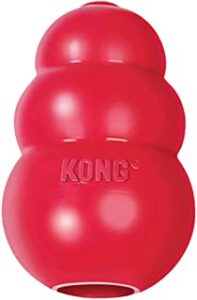 A Kong can also be filled with peanut butter or cream cheese for added enjoyment. And the Kong can also be stuffed with kibble and treats.
In order to make the most of this toy, you should rotate them often.
You may want to leave one of your dog’s favorite toys out at all times, but it’s better to rotate your dog’s toys weekly.
Rotate them so that your dog isn’t bored with one toy. Changing up toys regularly is essential for retaining their value as mental outlets.
There are many benefits to using interactive toys as training tools for dogs.
Choosing a training tool for your dog can be overwhelming. There are so many different types of tools available, each with their own benefits and drawbacks.
Here are a few tips to help you choose the right tool for your dog.
First, consider what type of behavior you would like to train your dog to do. There are many different types of training tools available, each designed for a specific purpose.
If you’re looking to teach your dog basic obedience commands, a clicker may be the best tool for you. If you’re trying to train your dog not to jump on people, a leash or harness may be more appropriate.
Next, think about your dog’s personality and temperament. Not all dogs respond well to the same type of training tool. If your dog is timid or shy, it may not respond well to harsh corrections or loud noises.
In conclusion, there are many different training tools available for dog owners. Some are more effective than others, but it is important to find the right tool for the job.
With a little bit of research and trial and error, any dog owner can find the perfect training tool for their pet.
Read more articles about:
